
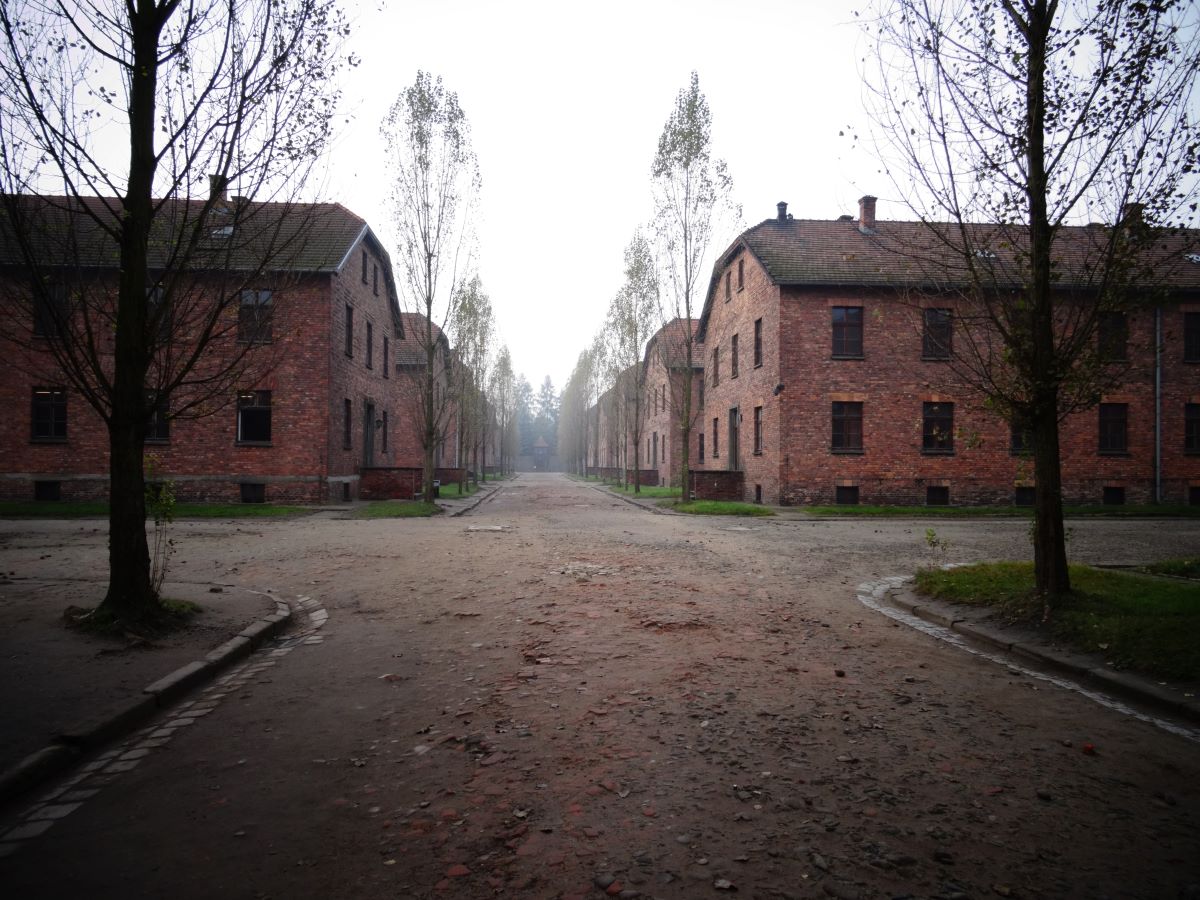
Perhaps the most famous of all dark tourism sites, Auschwitz was the largest of the Nazi Concentration Camps. Over 1.1 million men, women, and children lost their lives here.
Auschwitz-Birkenau is a symbol of terror, a word we’ve come to associate with some of the darkest days in European history. Your visit here is certain to emotionally affect you, so allow time for reflection afterward.
I’ve visited Auschwitz twice – once as part of a school trip when I was 16 and the second time with my husband. And both times I remember feeling an overwhelming feeling of darkness and sadness that I can’t explain. It took me a couple of hours after our visit to come back to myself.
In this blog post, I will guide you through what you can expect when visiting Auschwitz.
Why visit Auschwitz-Birkenau?
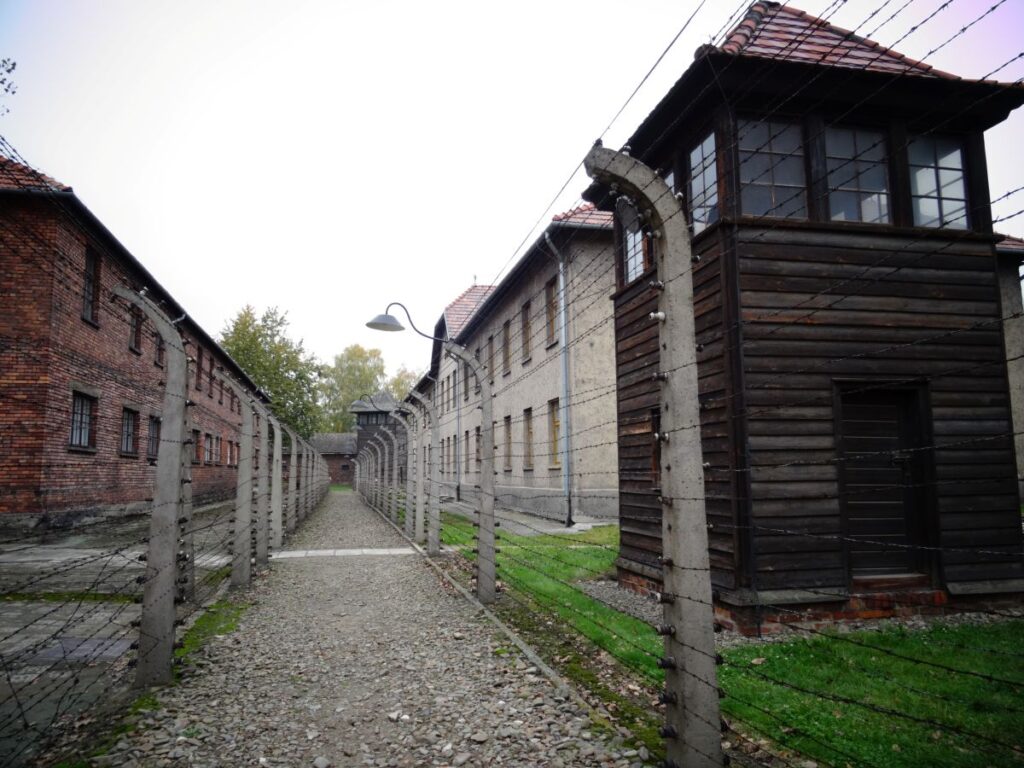
It’s a strange thing for me to have to say that you should visit Auschwitz, considering it’s where one of the saddest parts of recent human history occurred.
I remember learning about WWII and Auschwitz during my school years, and even at a young age, I remember feeling shocked and horrified. But personally, it felt important for me to visit the site and pay my respect to the victims.
I wanted to see for myself the site where evil happened, and also to remember the lives of the prisoners who were tortured and killed here.
The Auschwitz-Birkenau concentration camp was at the center of WWII. It was the largest concentration camp where shockingly close to 6000 people were killed every day. Of the estimated 1.3 million people sent to Auschwitz, 1.1 million died – mostly Jews brought to here from across Europe.
The number of prisoners at the camp at any one time reached 100,000. And I’m not sure how to explain it with words, but I really felt the prisoner’s presence as we walked through the site. I think others did too, as everyone was very reflective and quiet on our tour.
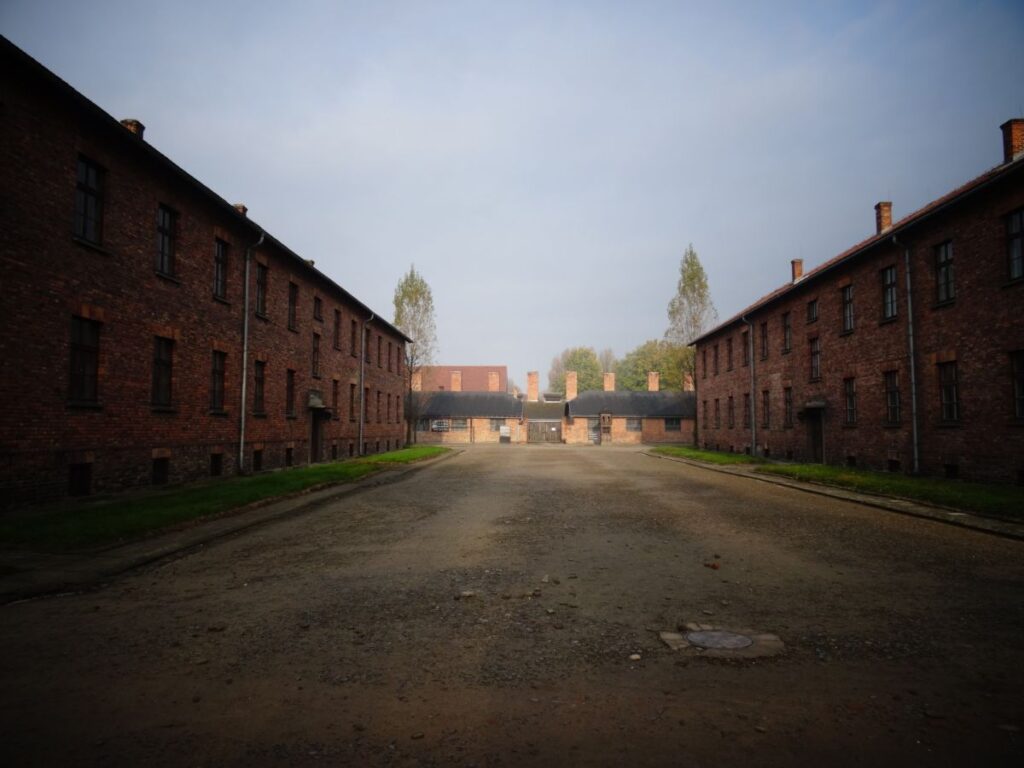
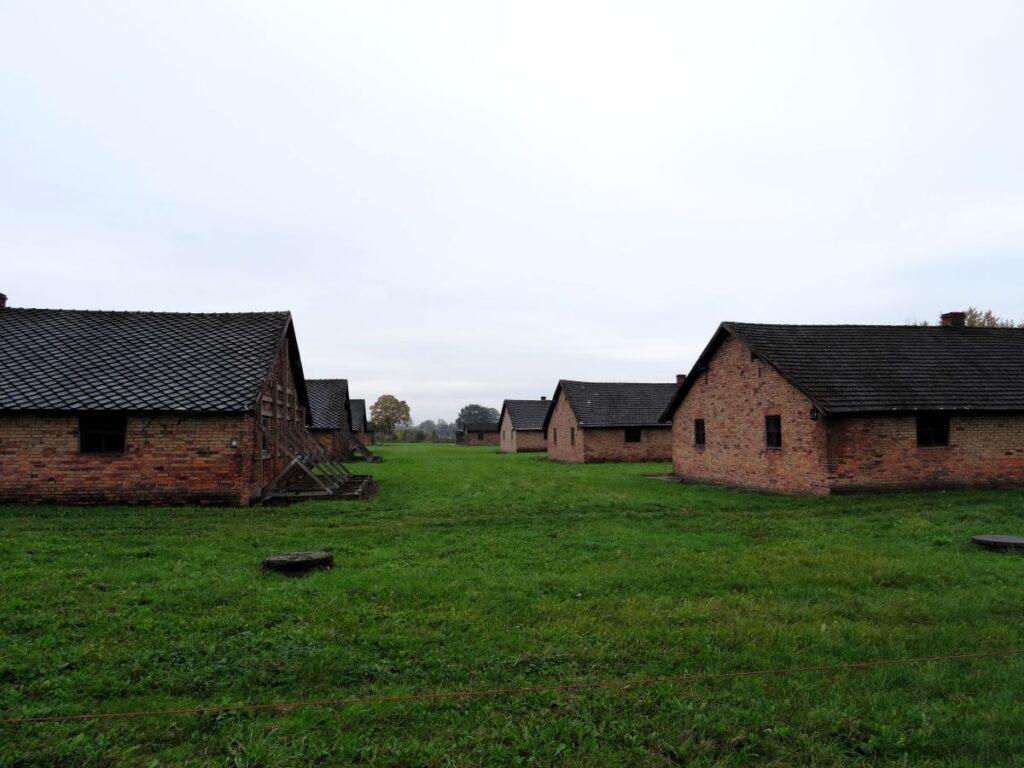
The Auschwitz memorial site holds the original camp blocks, gas chambers, and crematoria. But the most touching aspect of the memorial for me was seeing all the personal possessions of the victims on display. You will see their shoes, their suitcases (some with their names on them), and their camp clothes.
What do I need to know before going to Auschwitz?
- Book your tickets well in advance – Depending on the time of the year you plan to visit (April – October is the high season), I recommend booking your tickets or your guided tour at least a month out.
- Dress appropriately – By that I mean dress for the weather and for the site you’re visiting. This is a sombre, sad place, and so dressing up is not necessary.
- Re-think taking children here – It is not recommended to take children under 14 years to Auschwitz because, as you can imagine, what you’ll see and learn here is very shocking and disturbing.
- Remember, you’re not here to ‘sightsee’; this is a memorial, and so you should always act in a respectful manner throughout your visit here.
What is the best way to visit Auschwitz?
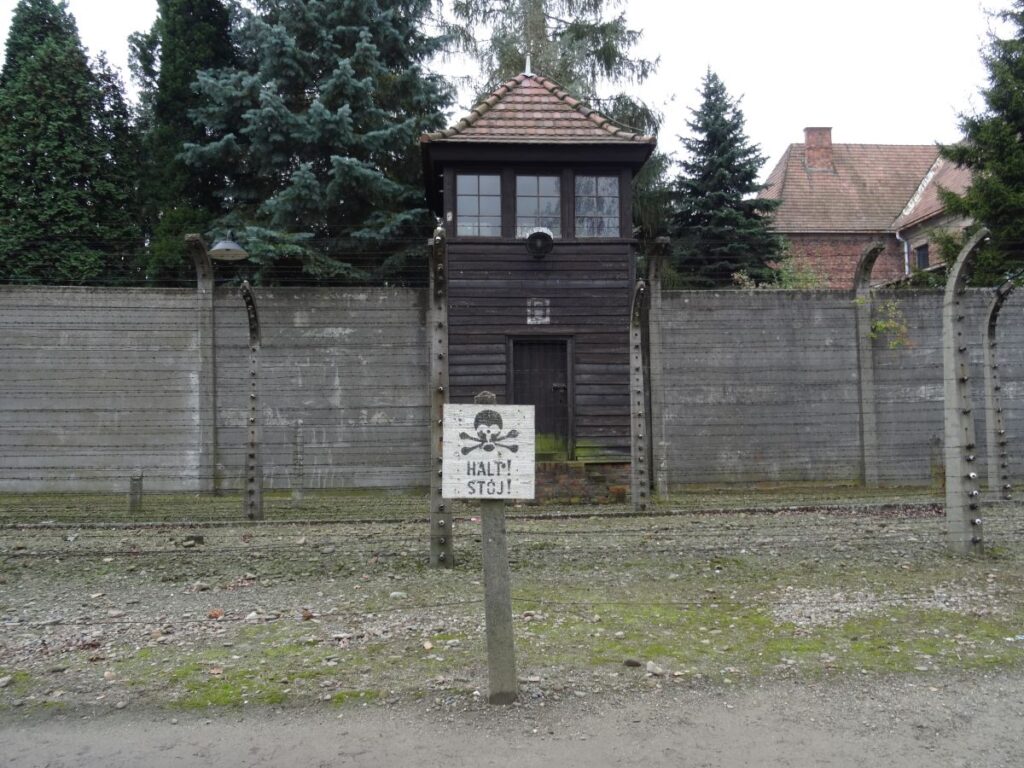
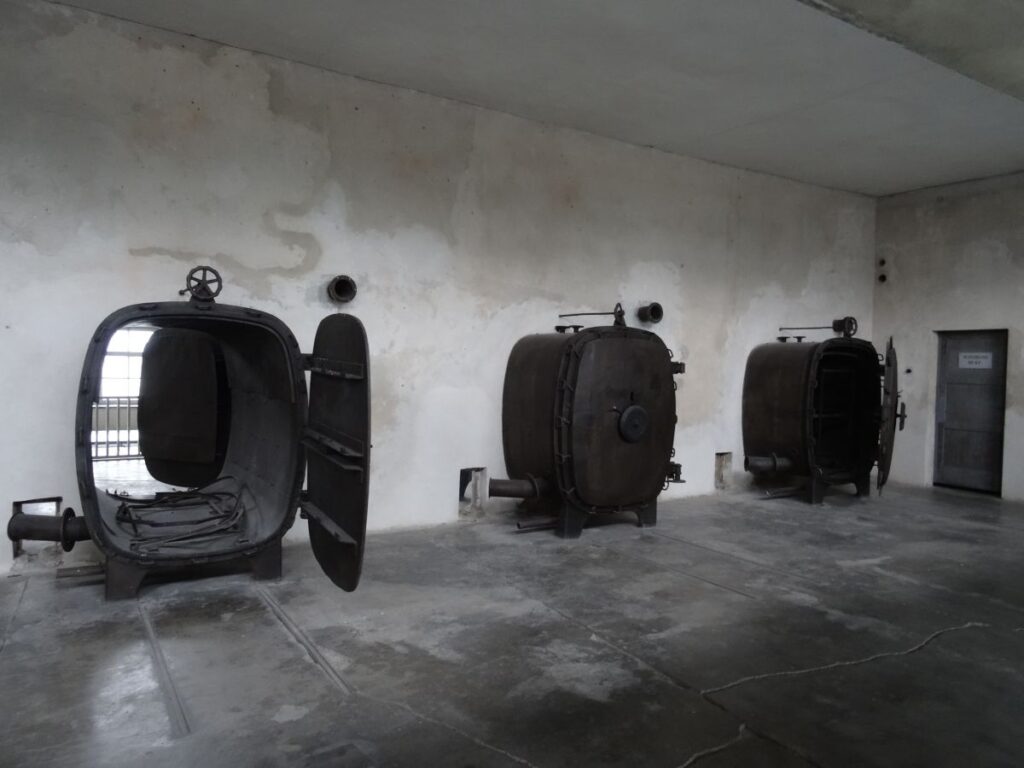
I would suggest hiring a guide to explore Auschwitz, as I can attest that it’s a very overwhelming experience. And having a knowledgeable guide on hand can significantly enhance your visit by providing context and insights that might not be obvious to you.
Our guide was great – he told us the history, personal stories, and detailed explanations about the events that took place. This really helped us to better understand the gravity and complexity of the Holocaust.
Having a guide also ensures that your visit is conducted with the utmost respect and sensitivity, guiding you through the experience in a way that honors the memory of those who suffered there. Additionally, a guide will help you navigate the site efficiently, ensuring you don’t miss any important areas.
For us, having a guide meant our visit was so much more than a walk through a historical site; it allowed us to engage deeply with Auschwitz’s history.
💡 This is our highly recommended tour of Auschwitz! It’s 3.5 hours long and is led by a professional educator who can tell you all about the sad and terrifying history of this dark place.

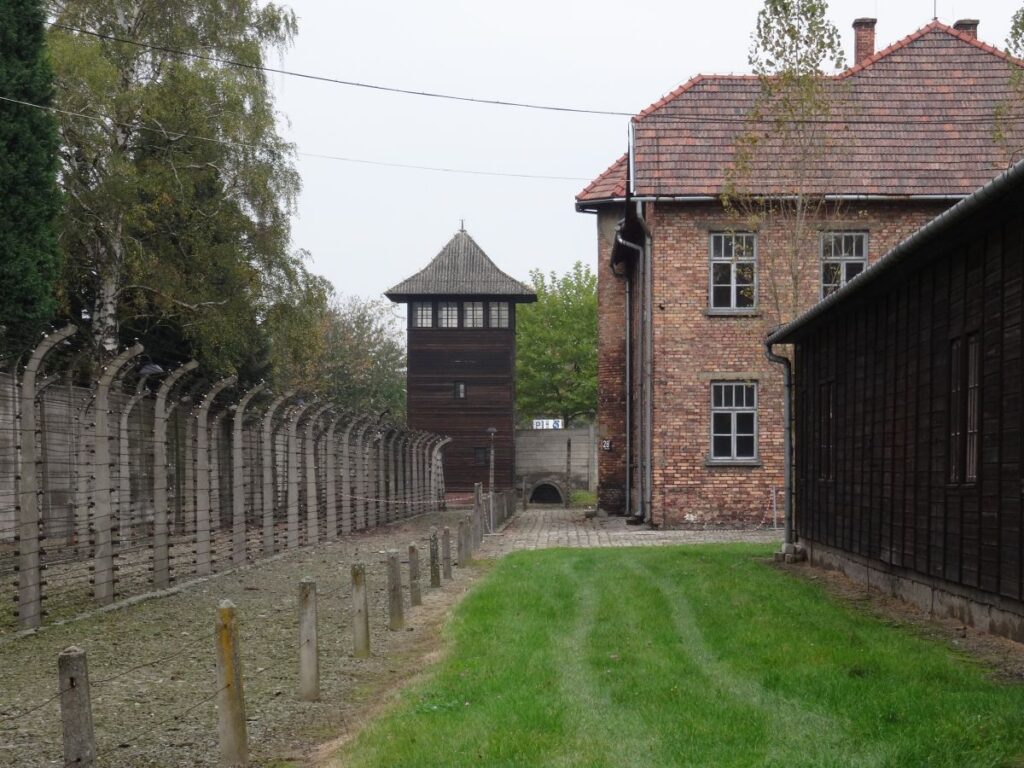
Best guided tours of Auschwitz:
This is the Auschwitz tour we did, and we highly recommend it. It’s actually one of the most-booked guided tours of the camp, and for good reason. It includes skip-the-line-tickets so you don’t need to queue up at the entrance (believe me, the lines can be looong!), a packed lunch, and the local guide who will take you around is so knowledgeable. The tour is around 3.5 hours long, which includes 1.5 – 2 hours at Auschwitz I and 60-75 minutes at Birkenau. It costs 48 euros ($55 USD) per person.
Another highly recommended tour of Auschwitz is this one, which includes pick-up from Krakow. This one is also 3.5 hours long and is led by a professional educator who can tell you all about the sad and terrifying history of this dark place. It’s cheaper at 19 euros ($22 USD) per person.
Can you visit Auschwitz without a guide?
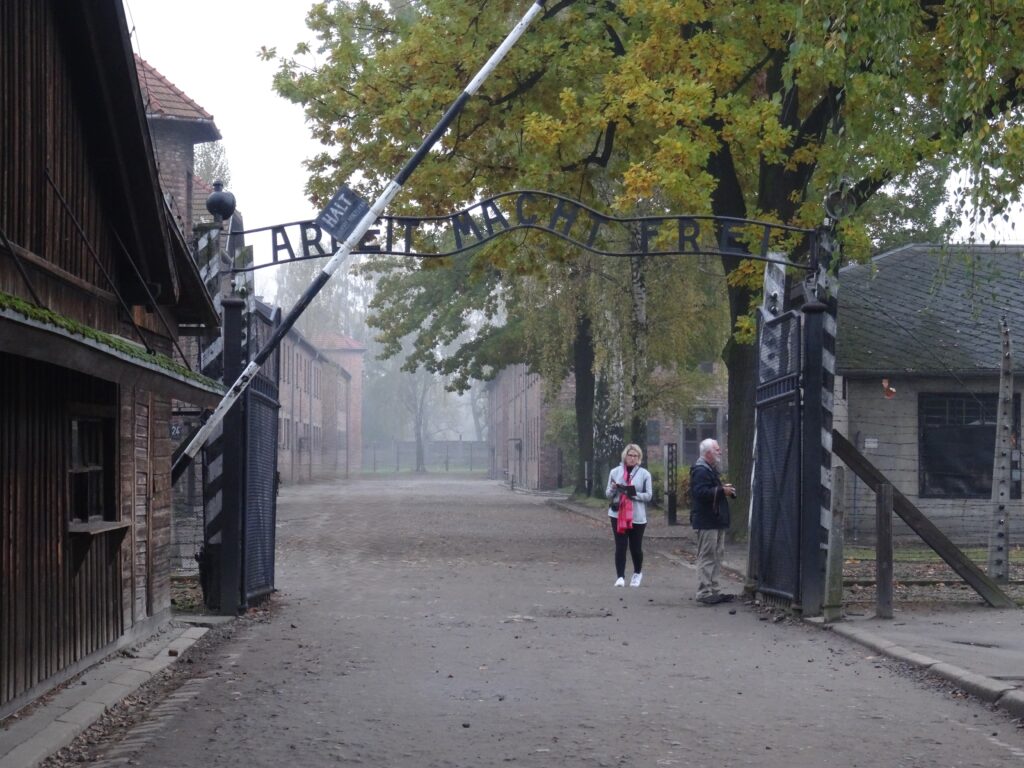
Of course, you can also visit Auschwitz without a guide – just keep in mind that Auschwitz is a large complex made up of several buildings. And it’s important to visit both the original camp (Auschwitz I) and the larger, newer camp at Birkenau, also known as Auschwitz II. FYI, you can get a free shuttle bus between the two camps.
My top tips for doing Auschwitz without a guide:
In Auschwitz I, notable buildings include Block 11, aka the “Death Block,” where prisoners were subjected to severe punishment, and Block 4, which houses exhibits detailing the Holocaust’s history. You can also view the infamous “Arbeit Macht Frei” gate and the original camp crematorium.
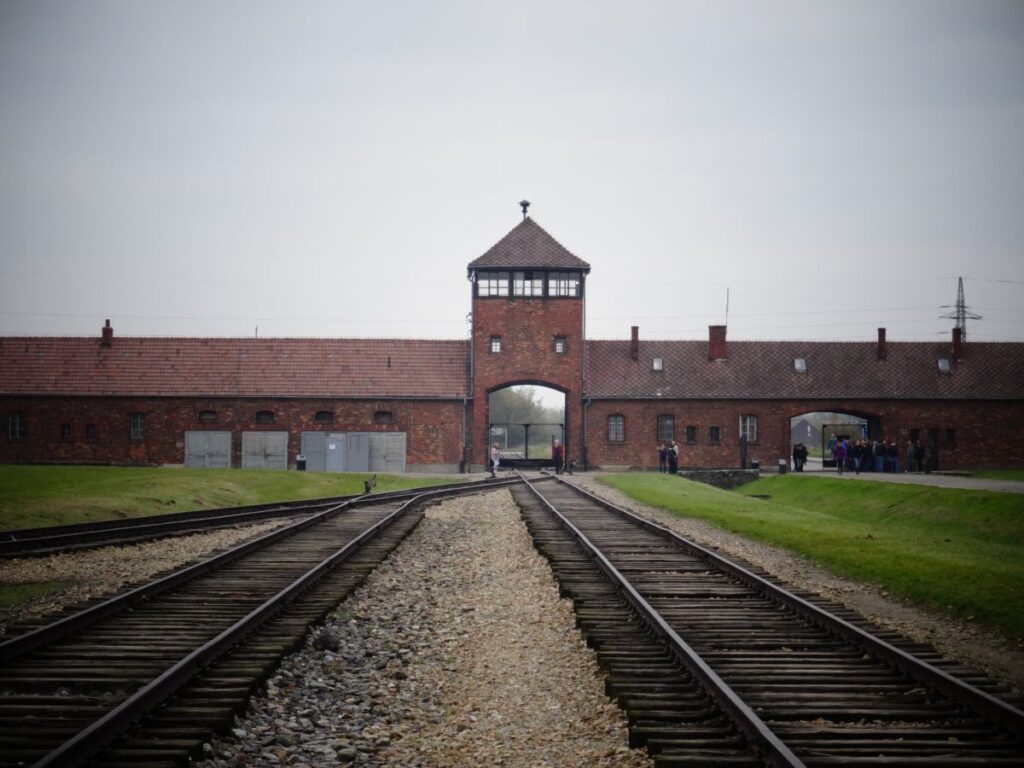
In Auschwitz II-Birkenau, key sites include the remnants of the gas chambers and crematoria, the railway tracks that brought countless victims to the camp, and the “Gate of Death,” the main entrance through which prisoners arrived.
I would allow between 3-4 hours at Auschwitz to see it all.
The best thing about DIY’ing it is that entrance to Auschwitz is free; you only pay if you want a guide. But, you MUST book your tickets online at least a month in advance, and you must arrive at the entrance 30 minutes before your time slot.
How much does it cost to visit Auschwitz?
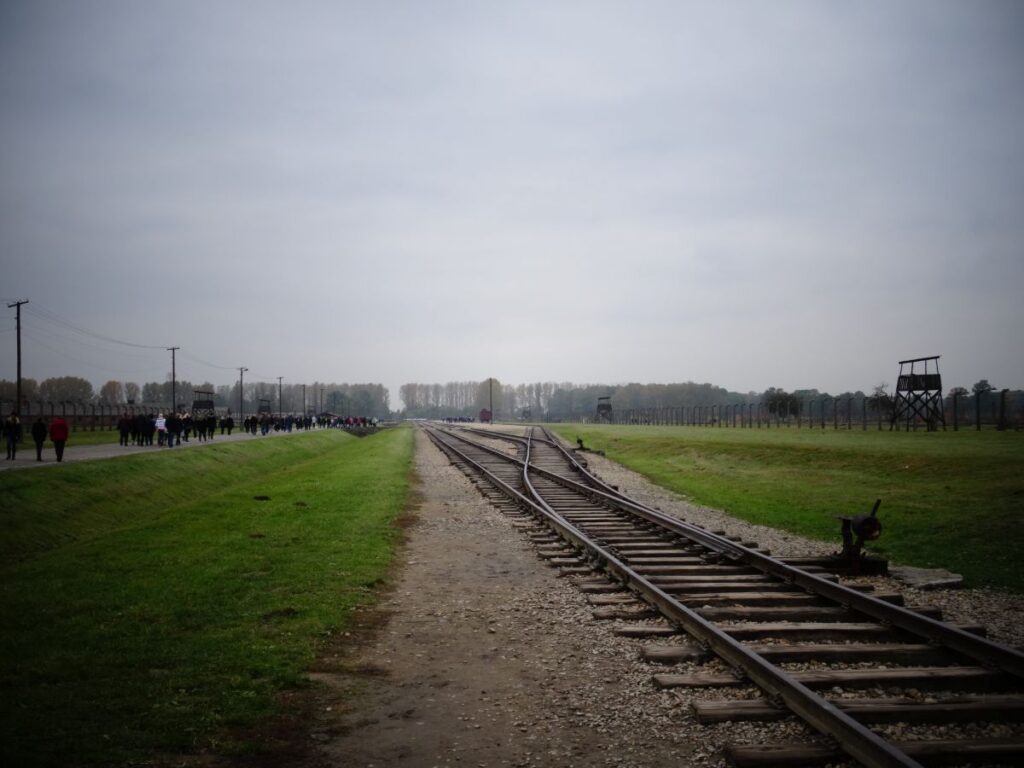
If you don’t need a local guide to take you around the site, then, entrance to Auschwitz is free. But, as I said, you must book your ticket online at least a month in advance.
If you want to do a guided tour (there are plenty of them) – expect to pay upwards of 22 euros per person.
What is the best month to visit Auschwitz?
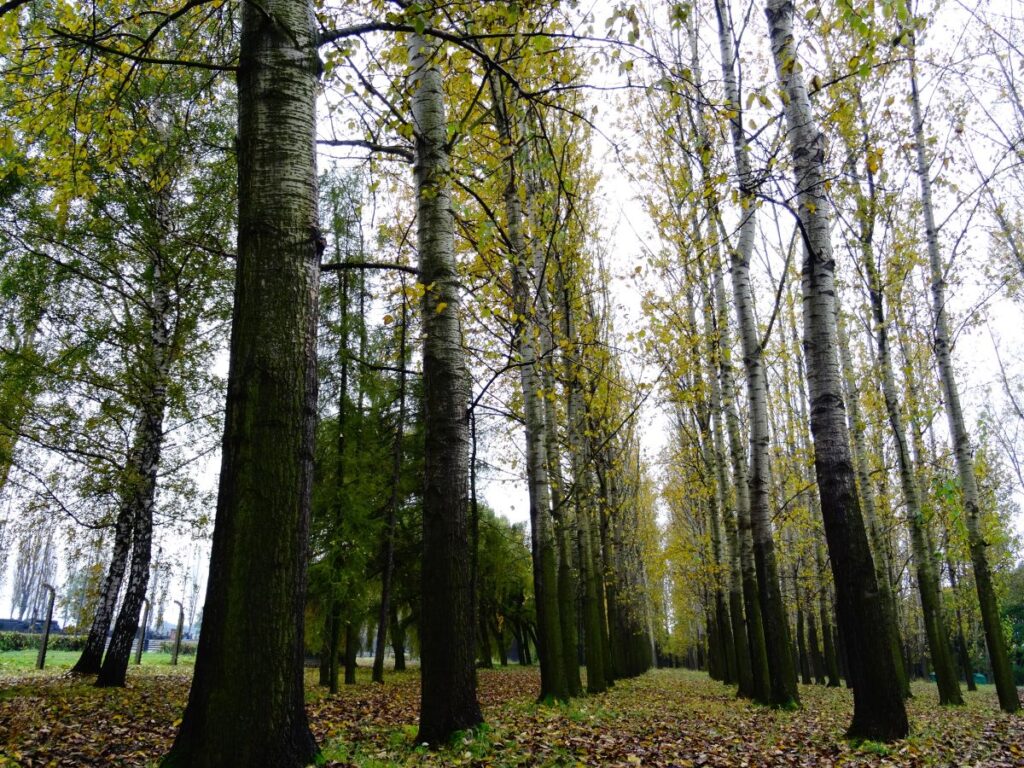
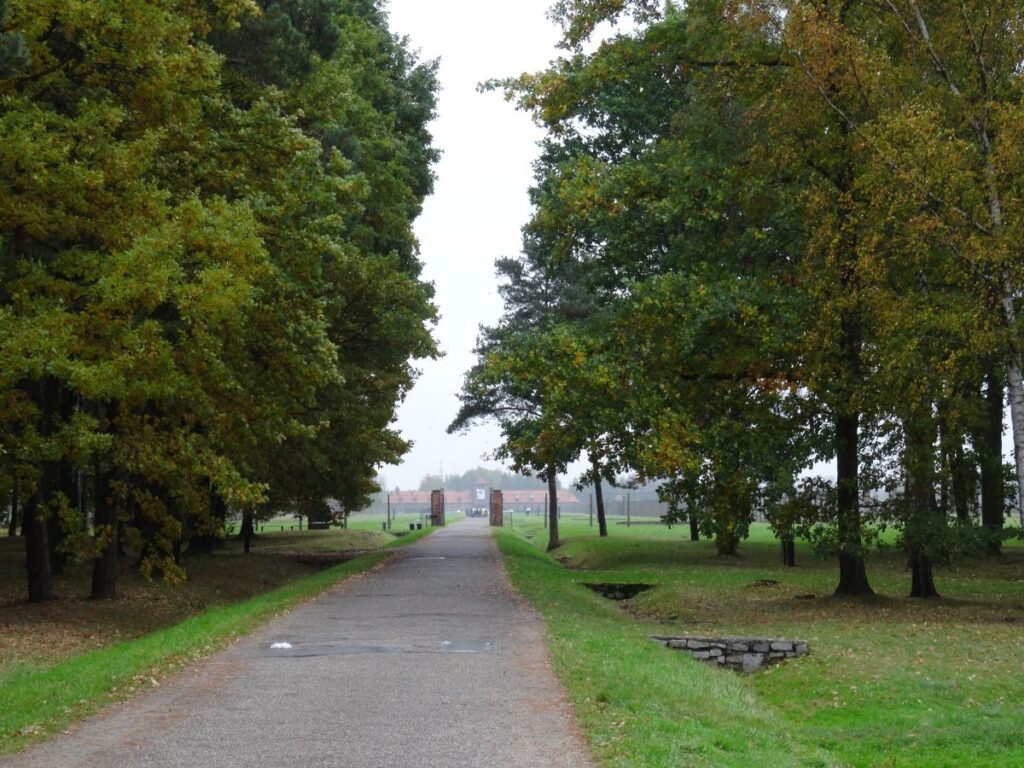
I would say that Spring (from March to May) is the best time to visit Auschwitz as the weather is pleasant (average temperatures of 14 Celsius in April) and you won’t have to deal with the Summer crowds.
March can still be cold here, though (average daily temps of 8 Celsius), so definitely wear a warm coat.
Getting to Auschwitz
The closest town to Auschwitz is Oswiecim, it’s just a few minutes’ drive from here. However, the larger and more well-known city, Kraków, is the closest major city and a common base for visitors, located about an hour away by car or train.
From Oswiecim:
You can drive or get a cab to Auschwitz easily, as it’s just 2 km from the center of town. If you’re visiting between April and October, there is a special “M” line train connecting the station here with the main entrance to the Museum. The ride takes five minutes, and it runs from 9am – 4pm daily.
From Krakow:
Krakow is around 70 km from Auschwitz, and you can get between the two by booking a guided tour that includes pick up from your Krakow hotel, or there are regular public buses to the museum, which are operated by Lajkonik bus company. Alternatively, you can get a train from Krakow to Oswiecim and from there get a cab or catch the “M” line (operating from April to October).
Where to Stay for Auschwitz:
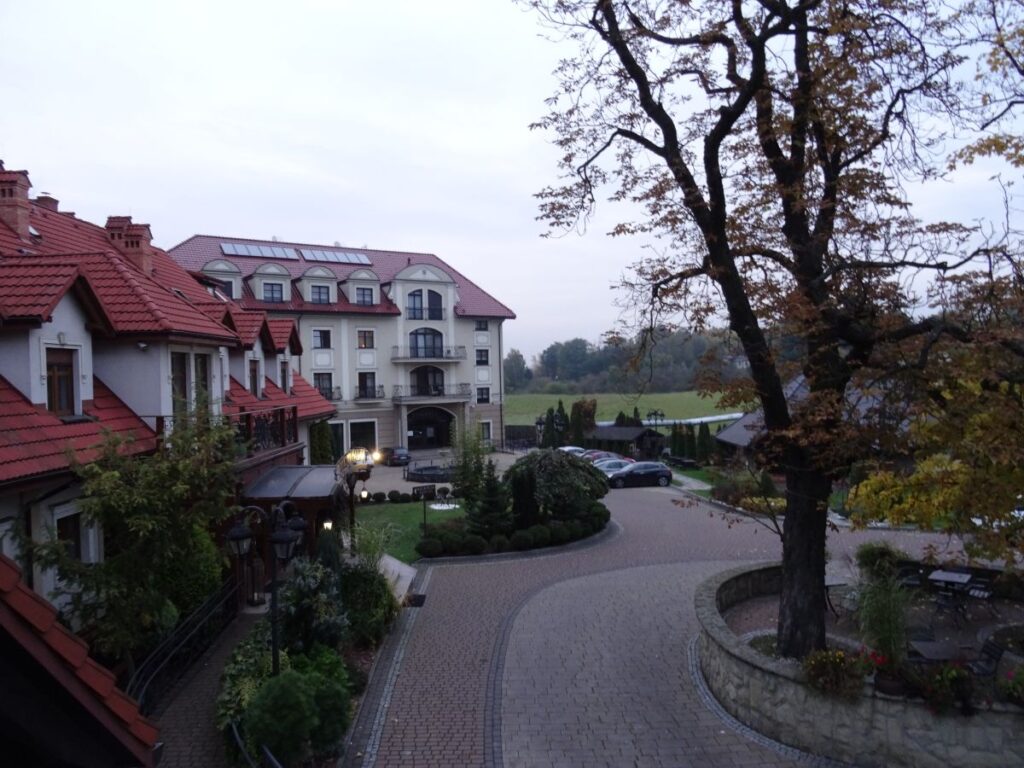
We stayed in Krakow and really rate Hyatt Place Krakow – this 4-star hotel is stylish, comfortable, and spotless. It’s ideal for a one-night stay, and their breakfast is great. A double room here costs around 70 euros per night.
Another great option in Krakow is the historic Pollera Hotel in the gorgeous Old Town of Krakow. This 3-star hotel was founded back in 1834, and the interior of the hotel is Art Nouveau in style. Expect to pay around 75 euros per night here.
While if you’d prefer to stay closer to Auschwitz, consider Oswiecim (the closest town to the site). Here, the 3-star Hotel Olecki is a brilliant option.
FAQ’s
Can you take photos at Auschwitz?
Photographing and filming for private (non-commercial) purposes are allowed in all areas that are open to the public, but not with a tripod or a flash. You cannot take photos in the Victims’ hair room (block 4) and the basement of block 11. Drones are restricted, and you need a permit to use one here.
What days is Auschwitz closed?
Auschwitz is open seven days a week except for January 1, December 25, and on Easter Sunday.
What are the opening hours?
Auschwitz-Birkenau is open from 7:30 am every day it’s open. The closing time varies by month, and the last entry is as early as 2:00 pm in December (due to how early it gets dark) and as late as 7:00 pm (for last entry) in June, July, and August.
Thanks for Reading!
If you’ve an interest in history, specifically WWII, Auschwitz-Birkenau is an essential visit. It really helped me understand the lives of the prisoners held here and made me even more angry and sad for the atrocities that occurred. I really hope this guide has helped to answer any hesitations you may have about your visit to Auschwitz-Birkenau.
PIN THIS
Last Updated on November 11, 2025 by snaphappytravel